Air Source Heat Pump FAQ
29-09-2025 Blog
In 2013, Clarendon Homes relocated its main office to Harrietsham, where we installed our very first air-source heat pump. Since then, we’ve included heat pumps in nearly every development and continue to make them a staple of our Clarendon Standard. With more than 12 years of experience making environmentally conscious choices, we’ve built a strong understanding of air-source heat pumps. And we also know how confusing they can be.
Keep reading to find out the answers to some of your most frequently asked questions.
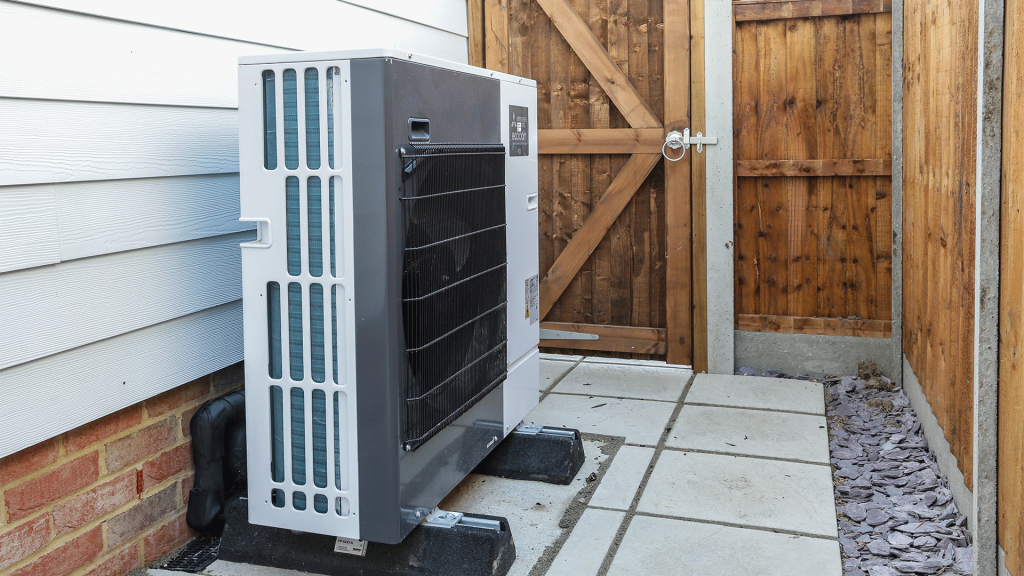
What are they?
An air-source heat pump is an outdoor unit that takes heat energy from the air, using the principles of thermodynamics to convert it into usable energy. This useable energy is how we heat our homes. Whether this is hot water, underfloor heating, or a radiator.
What do they do?
Heat pumps draw heat from the surrounding air, or from solar energy naturally stored in the ground. Through a compression cycle, this low-level heat is boosted to a much higher temperature, producing hot water to warm your home.
Electricity powers this process, and the amount consumed depends on both the input temperature and the required output flow temperature. The smaller the difference between these two, the less energy the system needs to operate. Since it runs on electricity, no carbon emissions are produced at the point of use.
Will a heat pump reduce my heating bills?
Having an air-source heat pump will mean that your electricity usage will rise. However, in most cases, you will no longer have gas or oil heating bills. This is, unless you opt for a bivalent system. A bivalent system pairs the heat pump with a gas or oil boiler as a backup. It’s important to look at the total heating cost overall, weighing the higher electricity consumption against the savings from reduced gas or oil expenses.
Clarendon homes are built with the heat pumps in mind, so there will be no pre-existing fossil fuel system to create a mixed system. This will mean bills will be condensed considerably into the electricity payment.
Are heat pumps noisy?
Air-source heat pumps are generally known to be quieter than a gas-boiler! Don’t let the big fan fool you, these systems are generally quiet. Think a low hum, or whirring sound, a bit like the hum of a dishwasher. Many air-source heat pumps also have a quiet mark on them, guaranteeing their subtlety.
Do I need to upgrade my radiators?
Here at Clarendon, we install heat pumps with underfloor heating on the ground floor, and then regular radiators and heated towel rails for the first floor.
In existing homes, heat pumps work with regular radiators. The only changes might be removing any boxes around them/ making sure the radiator has a bigger surface area. Heat pumps work with consistence, more of a slow burn than the short burst of high heat in a gas boiler. This means that, while radiators will work, they will be less intense.
These are only a few of the most frequently asked questions we could think of! If you have any more, please get in touch cara.dyos@clarendonhomes.co.uk!